
BEE MORPHOLOGY OVERVIEW DIAGRAMS
for DAVID CAPPAERT’S BEE GLOSSARY
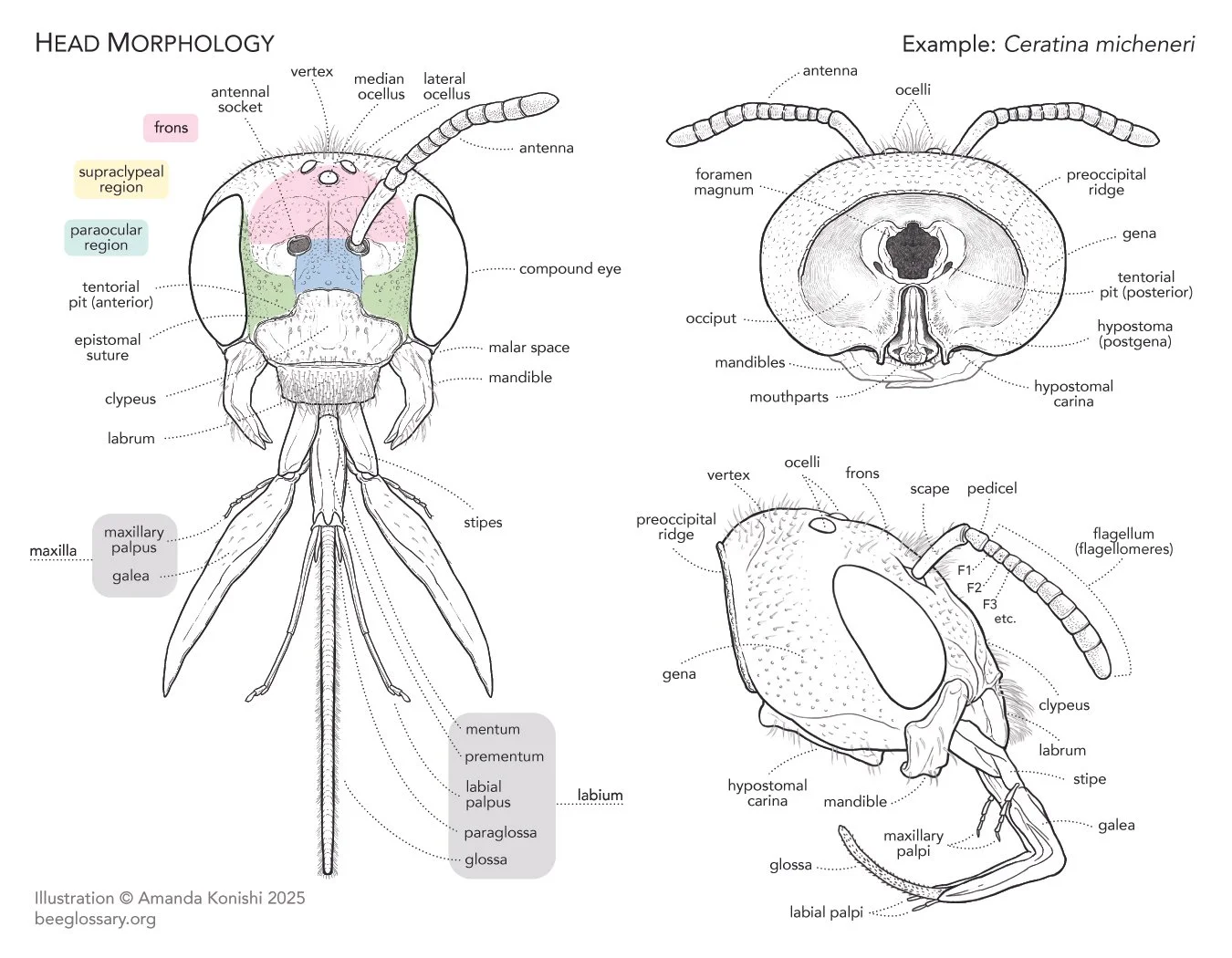
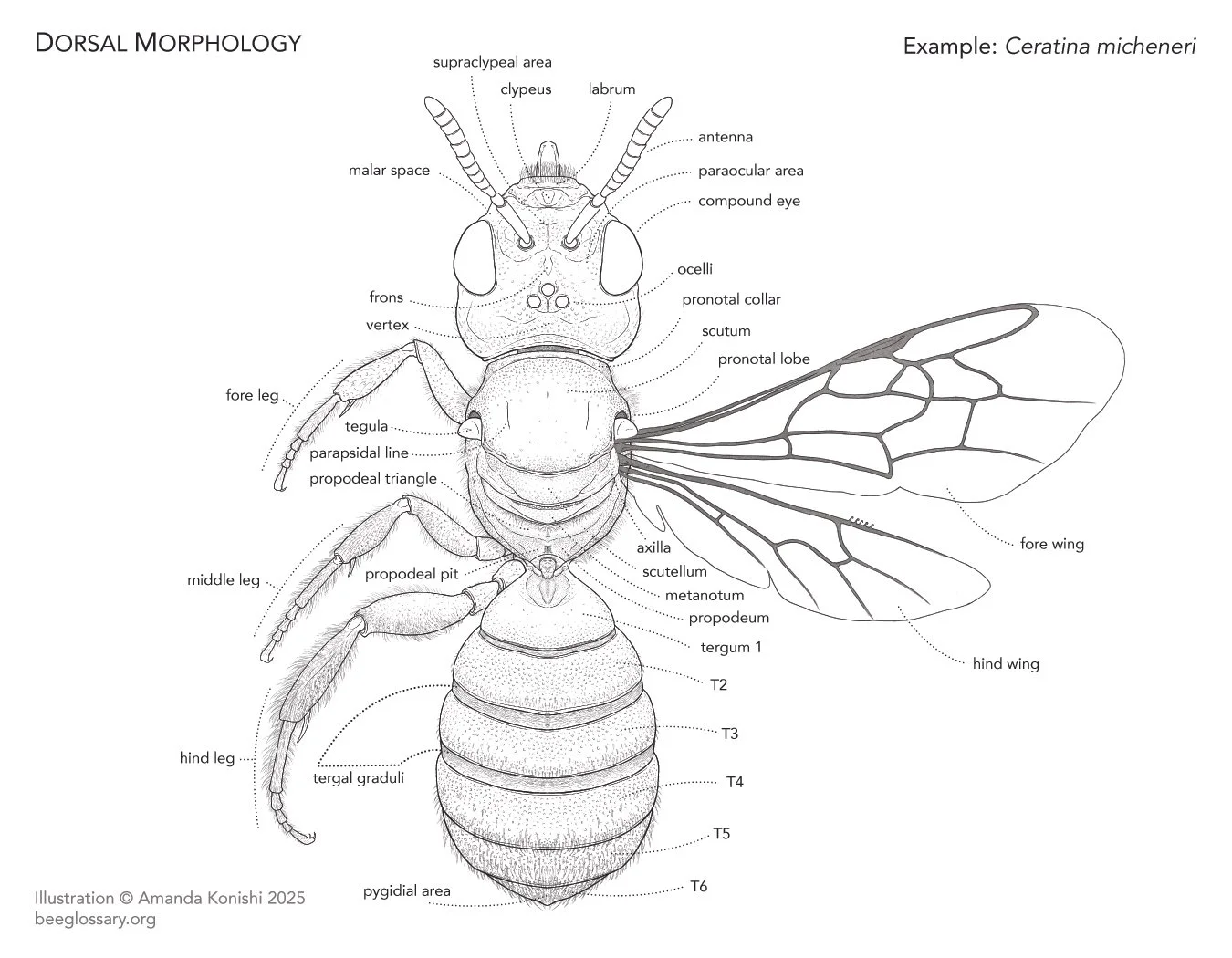
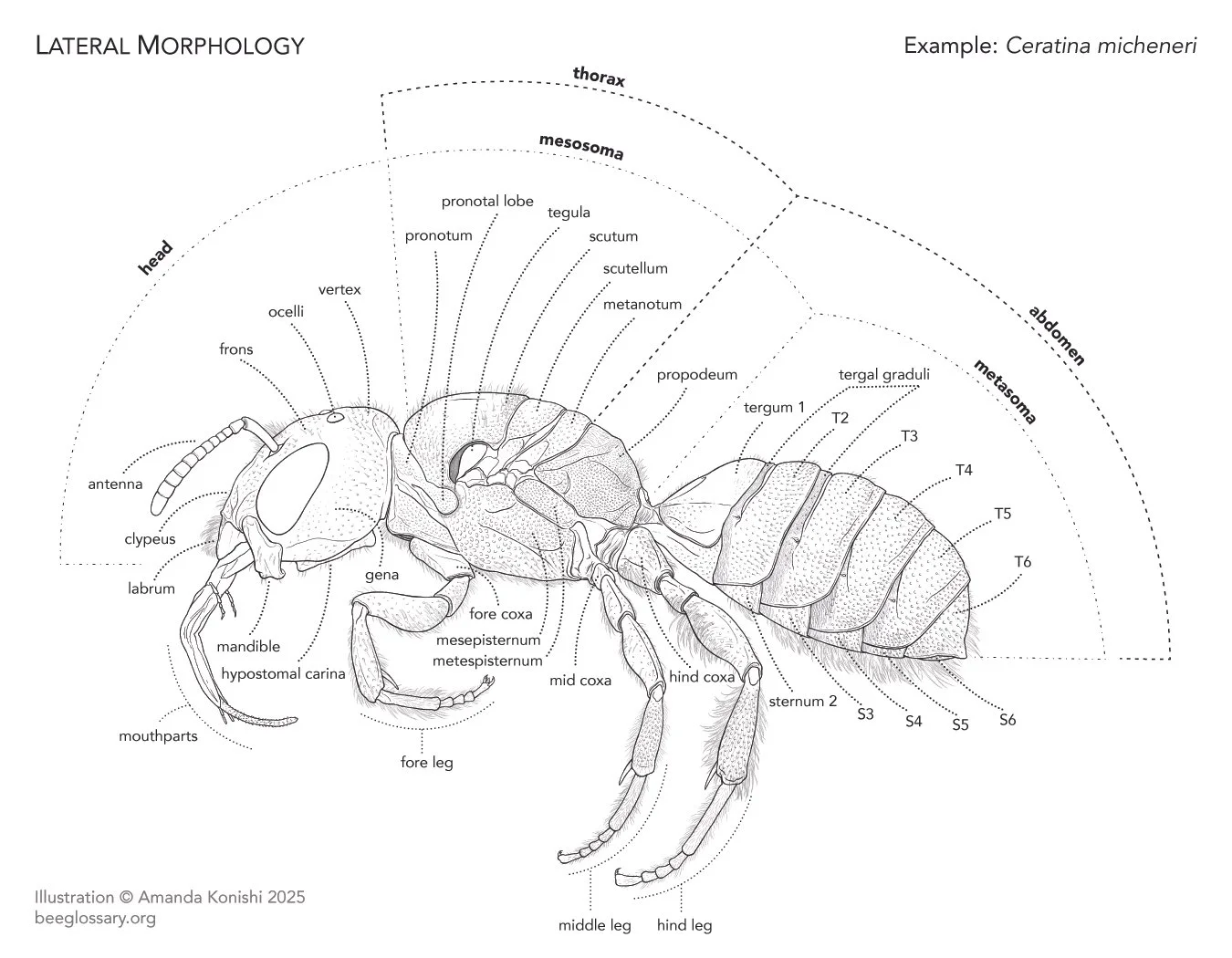
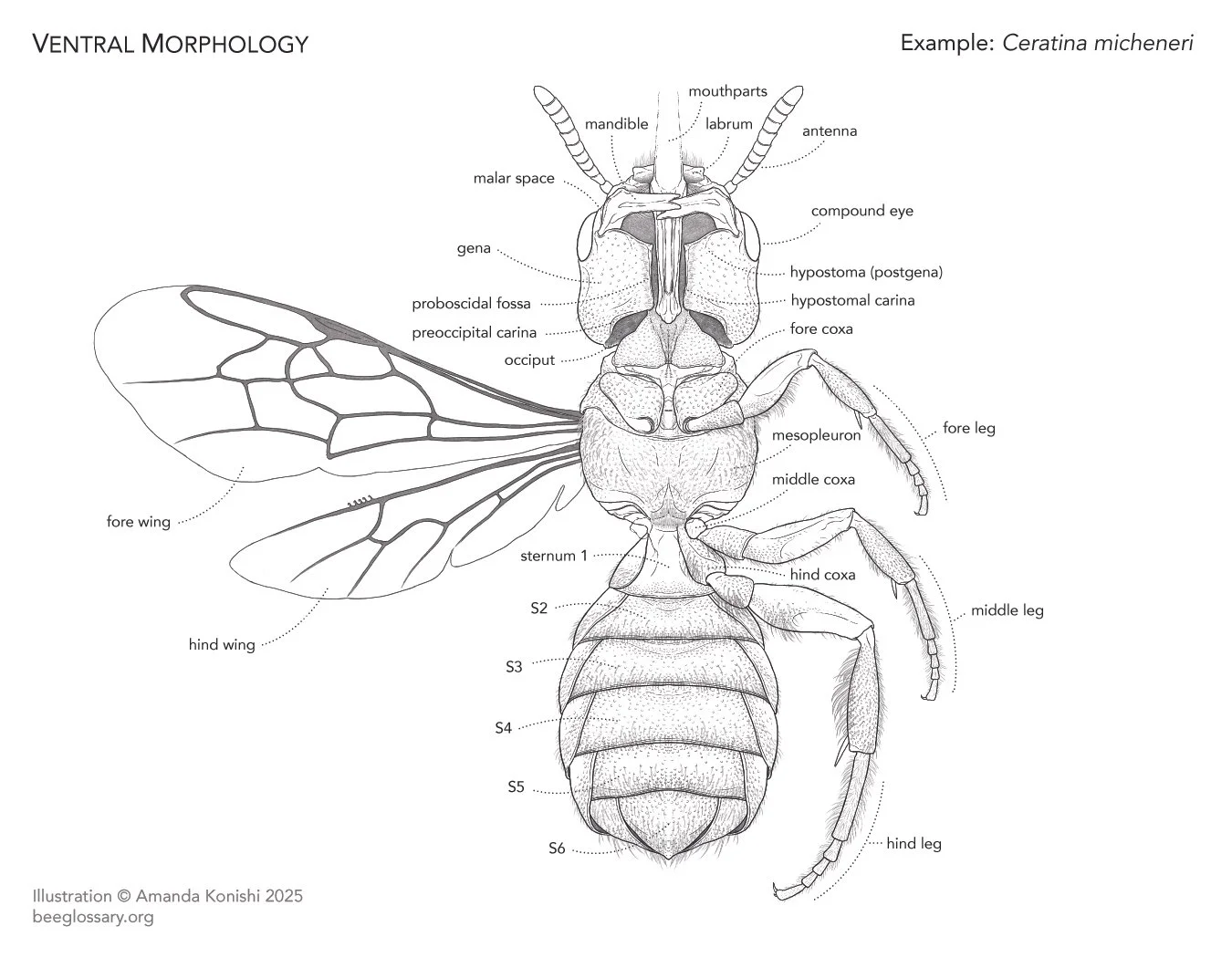
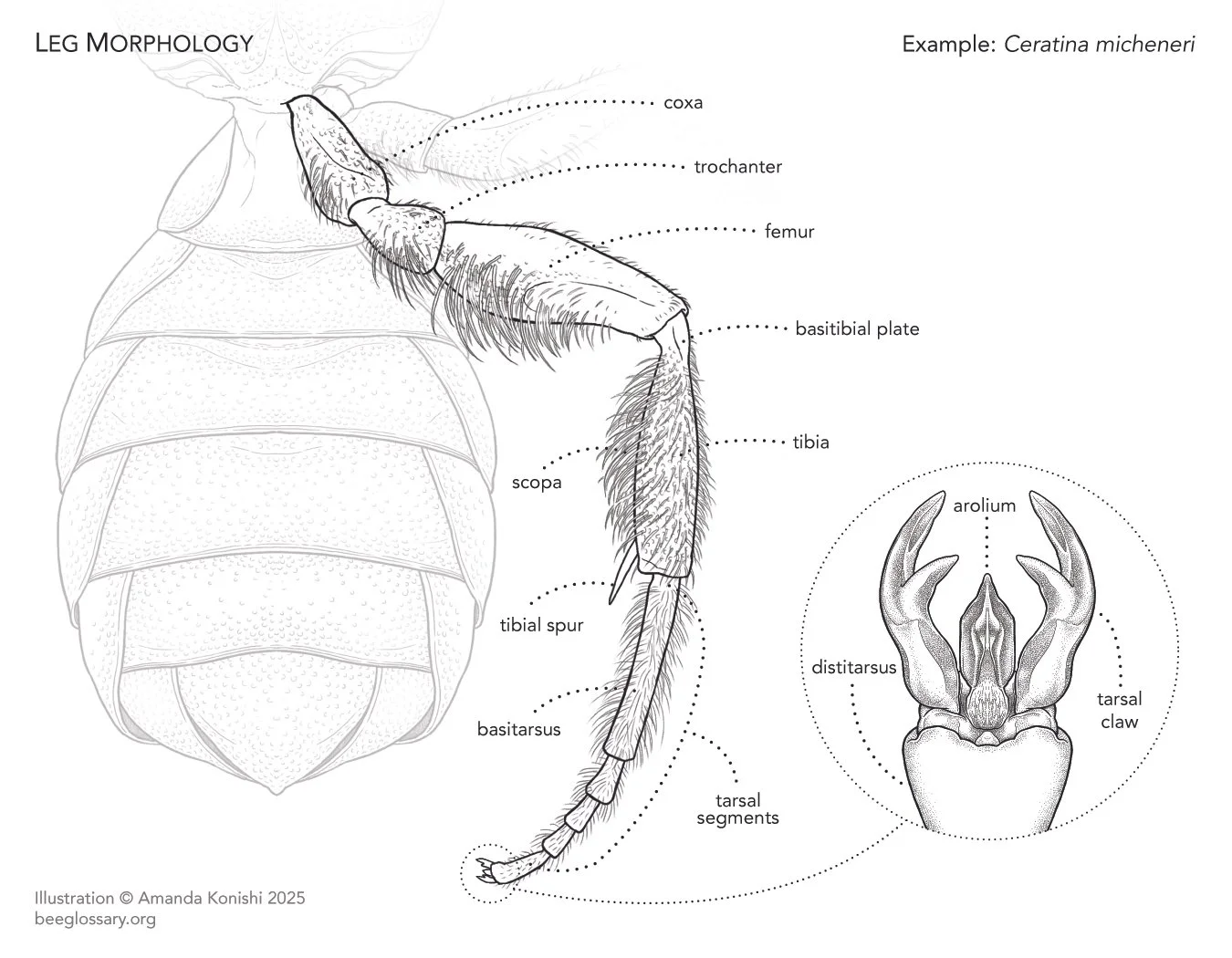
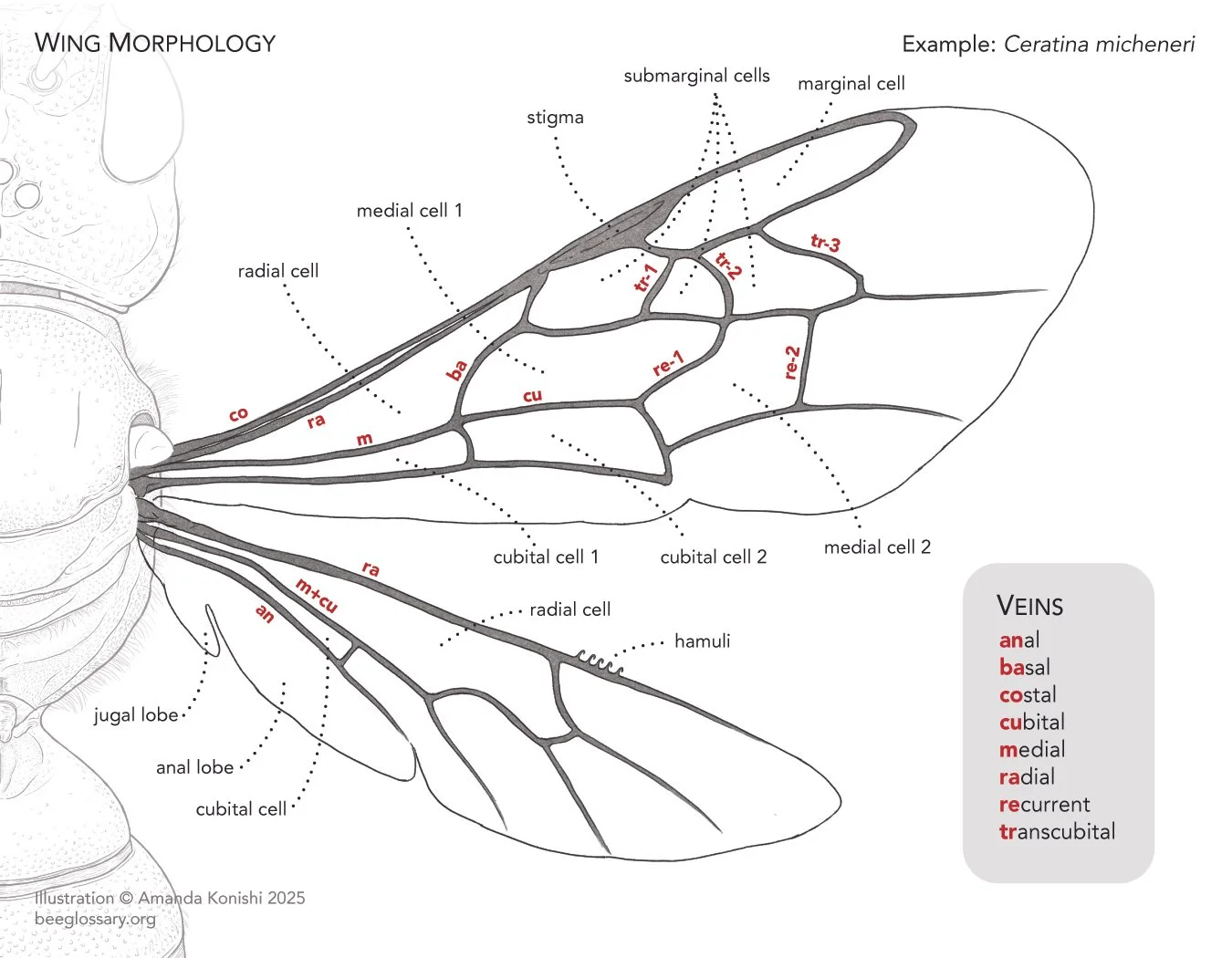
This series of six illustrations serve as an entrypoint to some of the complicated anatomical terminology used for the identification of bee species. While keys are readily available, they are often loaded with technical language that can be difficult to decipher for the non-taxonomist. David Cappaert has worked very hard to compile an accessible, thoroughly photographed and meticulously detailed glossary of some of these terms.
I worked closely with David to create these labeled diagrams of Ceratina micheneri to serve as an introduction to the Bee Glossary, with some of the most common anatomical features labeled clearly, while being linked directly to detailed glossary entries on beeglossary.org. The goal was to highlight the beauty and complexity of bees without diminishing any major features that are present when you are observing this organism under the scope or in the field. These diagrams provide a jumping off point for those who might just be start their bee identification journeys.
We chose Ceratina micheneri, a beautiful small carpenter bee found on the West coast of the United States, as the ‘spokesbee’ for these illustrations after careful consideration. Most of the technical bee anatomy illustrations out there remove some features such as hair or surface texture, but we wanted to honor these traits since they are quite important to each species in terms of identity. C. micheneri has relatively little hair and beautiful pitting on the body surfaces, so it was possible to include those features without obscuring major anatomical landmarks.
If you would like to use these illustrations for publication, education, or any other avenue,
please contact the artist with a Licensing Inquiry. Thank you!
Vivamus pellentesque vitae neque at vestibulum. Donec efficitur mollis dui vel pharetra.